Ocean pollution
Situation and trends
With the development of cities over the last few thousand years, and especially since the industrial revolution in Europe in the 18th century, oceans became a dumping ground for all kinds of waste. Solid and liquid wastes from both household and industrial sources, including all sorts of chemicals, have been discharged directly into the sea, carried into it by rivers bringing waste from further inland, or accidentally released into the sea when ships have sunk. Nuclear waste has been dumped in the sea since the 1950s. [CBRNe Portal, 2014]
The principal forms of waste in the oceans are:
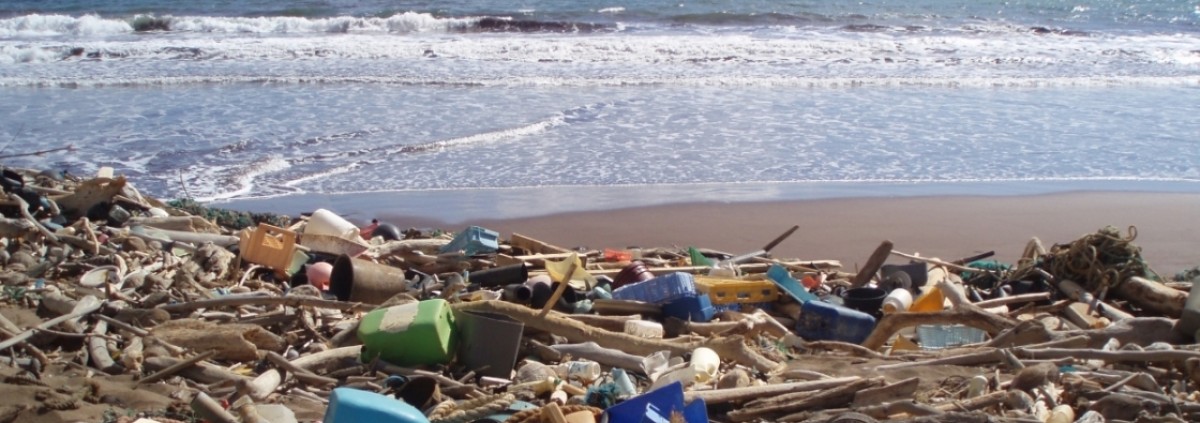
It has been estimated that 399,000 tons of plastic waste had accumulated in the oceans already by 2010 [NewAtlas.com] and 8 million tons/year was being added each year much of it being ‘single-use’ plastic items. [EllenMacarthurFoundation] This plastic kills =>>
Ø Agro- and other chemicals
Water runoff from fields farmed using industrially-produced fertilizers carries nitrogen and phosphorous compounds into rivers and on into the sea leading to excessive growth of algae (sometimes toxic), deoxygenation and eventually to the creation of ‘dead zones’. Other chemicals from industrial sites, shipwrecks and sewage also contribute to the development of dead zones whose number is increasing. … è
Ø Oil
Marine oil spills arise from accidents on offshore oil installations (platforms and drilling rigs), when oil tankers that are wrecked, when other ships that are wrecked and their bunker fuel oil escapes, and when ships flush out their fuel tanks at sea. Such spills have devastating effects… Þ
Þ Marine oil spills {pop-up or fold-down}
Marine oil spills arise when accidents occur on offshore oil installations (platforms and drilling rigs), oil tankers are wrecked, other ships are wrecked and their bunker fuel oil escapes, and when ships flush out their fuel tanks at sea.
Such spills have devastating effects on sea birds, all other ocean life forms, and the coastal environment in general, with consequent economic and social impacts on local communities. Clean-up and recovery from an oil spill is difficult and depends upon many factors, including the type of oil spilled, the temperature of the water (affecting evaporation and biodegradation), and the types of shorelines and beaches involved. Spills may take weeks, months or even years to clean up. [Wikipedia]
…
Ø Organic wastes
Organic waste reaching the oceans comprises principally untreated sewage and silage from intensive (‘industrialized’) livestock production. This waste renders water in rivers and lakes unfit for human consumption and it contributes to the formation of ‘dead zones’ in coastal waters and the ocean … è
Ø Invasive species
An ‘invasive species’ is a plant or animal species that is introduced into a new environment and becomes abundant at the expense of other species already present. In the context of oceans, new invasive species can be introduced:
- When a non-native species is released by accident; …Þ
Þ Accidental release of an invasive marine species {pop-up or fold-down}
As an example: In 1984 the aquarium of Monaco ‘mistakenly’ released a non-local strain of Caulerpa alage into the Mediterranean Sea where it decimated native algal species by out-competing them for food and light. Toxic compounds contained in its foliage also accumulated in the flesh of native fish which were able to eat it, making them unsuitable for human consumption. [Laura Malaguti]
- When a ship discharges ballast water that had been loaded in another part of the world – i.e. in another ecological zone.
Ways forward
Reducing ocean pollution requires:
- Establishing and enforcing appropriate regulations on domestic, industrial, and agricultural waste disposal to prevent plastic, chemical and other untreated waste from reaching the ocean
- Developing and ensuring the large-scale implementation of measures to clean-up existing pollution
- Ensuring the rapid deployment of appropriate containment and clean-up measures in the event of an accident, and that potential polluters hold insurance to pay for clean-up costs
- Enhancing measures to reduce the risks of accidents at sea.
** Do YOU have any information on existing initiatives or proposals to achieve the above objectives? If so, please contribute! **